Everest Base Camp Trek October 2026: Too Late to Book?
Booking an Everest Base Camp trek from August for the 2026 autumn season - what is still available, real permit costs, the Ramechhap flight, and October vs November.

No, August is not too late for the 2026 autumn season. Early October is the tight window - the high-camp lodges at Lobuche and Gorak Shep are largely spoken for - while late October and November still have room. Pick October for warmth and the festival, November for the clearest mountain views of the year and a genuinely quiet trail.
It is August, the monsoon is winding down over the Khumbu, and you want to know two things: whether you have missed the boat on this autumn's Everest Base Camp trek, and whether to aim for October or November.
Short version: you have not missed it. What you have missed is the pick of the lodges at 4,900m for the first fortnight of October, which is a smaller loss than it sounds. Late October and November are still wide open.
And if an operator has just mentioned a 1 AM drive to somewhere called Ramechhap instead of a flight out of Kathmandu, nothing has gone wrong. That is what peak season looks like, and it is arguably in your favour.

Booking from August: the order that matters
Trekking companies will tell you to book five months out. Sound advice in March, useless today. Here is the sequence that works from a standing start in August.
| Do this | When | Where you stand in August |
|---|---|---|
| Guide or agency, plus high-camp lodges | This fortnight | Early Oct tight, late Oct and Nov fine |
| International flights to Kathmandu | This fortnight | Sept-Nov fares are already climbing |
| Insurance with a real altitude ceiling | Next month | Available any time, just get it right |
| Confirm the Lukla departure airport | 2-4 weeks out | Set season by season, so verify late |
For a departure between 1 and 15 October, your agency will be negotiating for beds at Lobuche (4,940m) and Gorak Shep (5,164m) rather than picking from a menu. You will get a bed. You may not get a room you would choose. Walk-ins in those weeks routinely end up on dining-room benches, which at 5,164m is a colder proposition than it sounds at sea level.
Want a comfortable booking and a quieter trail? Aim for 25 October to 15 November. If only early October works, book this week rather than next.
Do you actually need a guide?
Search this and you will get flat contradictions, sometimes on the same page. Worth knowing why: nearly every site ranking for Everest Base Camp queries is published by a company that sells guided treks. Tripmojo sells no treks, no tours and no guides, so here is the unvarnished version.
Nepal's Tourism Board introduced a licensed-guide requirement for trekkers on 1 April 2023. But the Khumbu runs its own permit system through the Khumbu Pasang Lhamu Rural Municipality, and it is widely reported not to have adopted that rule inside its boundaries. Guides published in 2026 flatly disagree on whether the mandate binds you on this particular trail. Meanwhile enforcement at Lukla and the Monjo checkpoint has been tightening regardless, and solo trekkers have been told to hire someone on the spot.
So: hire a guide. Not because the paperwork forces you to, but because at USD 30 to 40 a day they solve problems the paperwork does not.
- Beds. Lodge owners at Lobuche and Gorak Shep hold rooms for guides they have worked with for years. In October that is worth the fee on its own.
- Altitude. The first symptoms of altitude sickness impair exactly the judgement you would need to assess your own altitude sickness. Someone watching you daily is not a luxury above 4,000m.
- Disruption. When flights go on hold, a local guide reshuffles transport through a network you do not have.
What you should not accept is being told an expensive all-inclusive package is a legal requirement. That claim is contested, and the people making it loudest are selling the package.

What the permits really cost
This is the cheapest part of the trip and the part most often padded. Two permits, both obtainable once you are in Nepal - there is nothing to arrange months ahead.
| Permit | Cost | Roughly | Where |
|---|---|---|---|
| Sagarmatha National Park | NPR 3,000 | USD 22-30 | Kathmandu or the Monjo gate |
| Khumbu Pasang Lhamu Rural Municipality | NPR 2,000-3,000 | USD 15-22 | Lukla or Monjo |
Call it USD 37 to 50 for a foreign passport. Holders of SAARC passports, which includes Indian nationals, pay a reduced national park rate of around NPR 1,000 to 1,500. Children under 10 are exempt from the park fee.
The line item to query
A TIMS card is not required in the Khumbu. The municipality fee replaced it. Yet quotes for Everest Base Camp still routinely carry a TIMS charge of around USD 17, and at least one widely-read permits guide manages to state that TIMS is not needed in the Khumbu and then list it in its own Everest cost table a few screens later.
The confusion is genuine, but you are the one paying for it. If a TIMS line appears on an Everest quote, ask what it is for.
Ramechhap is not the problem, it is the fix
If your flight paperwork says Manthali Airport, Ramechhap (RHP) rather than Kathmandu, that is the standard peak-season arrangement. The Civil Aviation Authority of Nepal moves Lukla flights there for the busy months, roughly late September to late November, though the exact window is set season by season. Confirm your departure airport two to four weeks out rather than trusting a date printed when you booked.
In practice: a hotel pickup between 1:00 and 1:30 AM, four to five hours east on the BP Highway, then a 15 to 20 minute flight into Lukla instead of the 30 to 35 minutes it takes from Kathmandu.
Every trekking blog files this under bad news. They have it backwards.
Kathmandu has one runway, shared between long-haul jets and small turboprops. Mountain flights here run on visual flight rules, so they have to be finished before cloud and wind build in, usually by about 11 AM. Queue every Lukla departure behind international arrivals on that single runway and plenty of them never make the window. Ramechhap sits at 474m, below the fog that pins Kathmandu mornings, and handles no international traffic, so the Twin Otters and Dorniers shuttle back and forth all morning. You are trading a night's sleep for a substantially better chance of flying on the day you planned to.
Three things that catch people out:
- Baggage is 10 kg checked plus 5 kg carry-on. Not a guideline. Sort your bags in Kathmandu the night before, not at a check-in desk at 6 AM.
- There is no luggage storage at Manthali. Anything not flying with you stays at your Kathmandu hotel.
- The helicopter fallback has a catch. A seat from Manthali to Lukla runs about USD 400, and USD 500 to 700 direct from Kathmandu, but a booked charter yields to evacuation flights. A confirmed helicopter is not a guaranteed helicopter.

October or November
Most sites split this across two articles, which conveniently avoids making a recommendation. Here is the trade in one place.
| October | November | |
|---|---|---|
| Namche (3,440m) | 10 to 15C day, -2 to -5C night | 5 to 10C day, -2 to -5C night |
| Dingboche (4,360m) | 5 to 10C day, -8 to -12C night | 0 to 5C day, -12 to -15C night |
| Gorak Shep (5,164m) | -2 to 5C day, -15 to -20C night | -5 to 0C day, -20 to -25C night |
| Crowds | Heaviest of the year | Busy to the 14th, quiet after |
| Views | Excellent, some afternoon cloud | The clearest air of the year |
| Sleeping bag | -15C, or -20C after the 20th | -20C, or -25C after the 15th |
| Also pack | Poles | Poles and microspikes |
My call: if this is your first time above 4,000m, go in October. The margin for error is wider when the nights are ten degrees warmer, and there are people around if something goes wrong. If you have altitude experience and own real cold-weather kit, late November is the better trek - the air is drier than at any other time of year, and above Dingboche you can go an hour without seeing another group.
The cold in November is not a detail to gloss over. Gorak Shep nights sit between -20C and -25C, with snaps to -28C, and teahouse rooms are unheated, barely warmer inside than out. A bag rated to -15C is an October bag. If you are renting in Kathmandu, put your hands in it and check the down still has loft; a tired rental that is fine in April is not fine in late November. From mid-month, 10 to 30cm of snow above Lobuche is normal, the Kala Patthar path ices overnight, and microspikes stop being optional.
One October bonus worth timing for: Mani Rimdu, the three-day masked-dance festival at Tengboche Monastery (3,867m), falls in late October or early November. The date follows the Tibetan lunar calendar, so confirm it for this year before building an itinerary around it - a standard 14-day trek can usually be shifted to pass through without adding days.

What a buffer day is actually insuring
Everyone tells you to build in buffer days. Nobody tells you what you are protecting.
It is not the Lukla ticket. If weather grounds you, that seat rolls to the next departure. What is exposed is the long-haul flight home, and rebooking one of those at short notice out of Kathmandu can easily run USD 500 to 1,500 between change fees and fare difference - more than your permits, guide and domestic flights put together.
One buffer day in Kathmandu after an October trek. Two after November, when morning valley fog causes one and two day holds, most often in the second and third weeks. Never book the flight home for the same day you are due out of Lukla.
Keeping track of it is genuinely fiddly: a long-haul ticket, a Kathmandu hotel, a domestic flight that may leave from a different airport than the one printed, permits, insurance and a lodge chain, all hanging off a weather window. Tripmojo pulls those confirmations out of your inbox into one trip timeline and tracks the flights live, so a schedule change reaches you as a change to the whole trip rather than a stray email you read three hours later.
The insurance number nobody checks
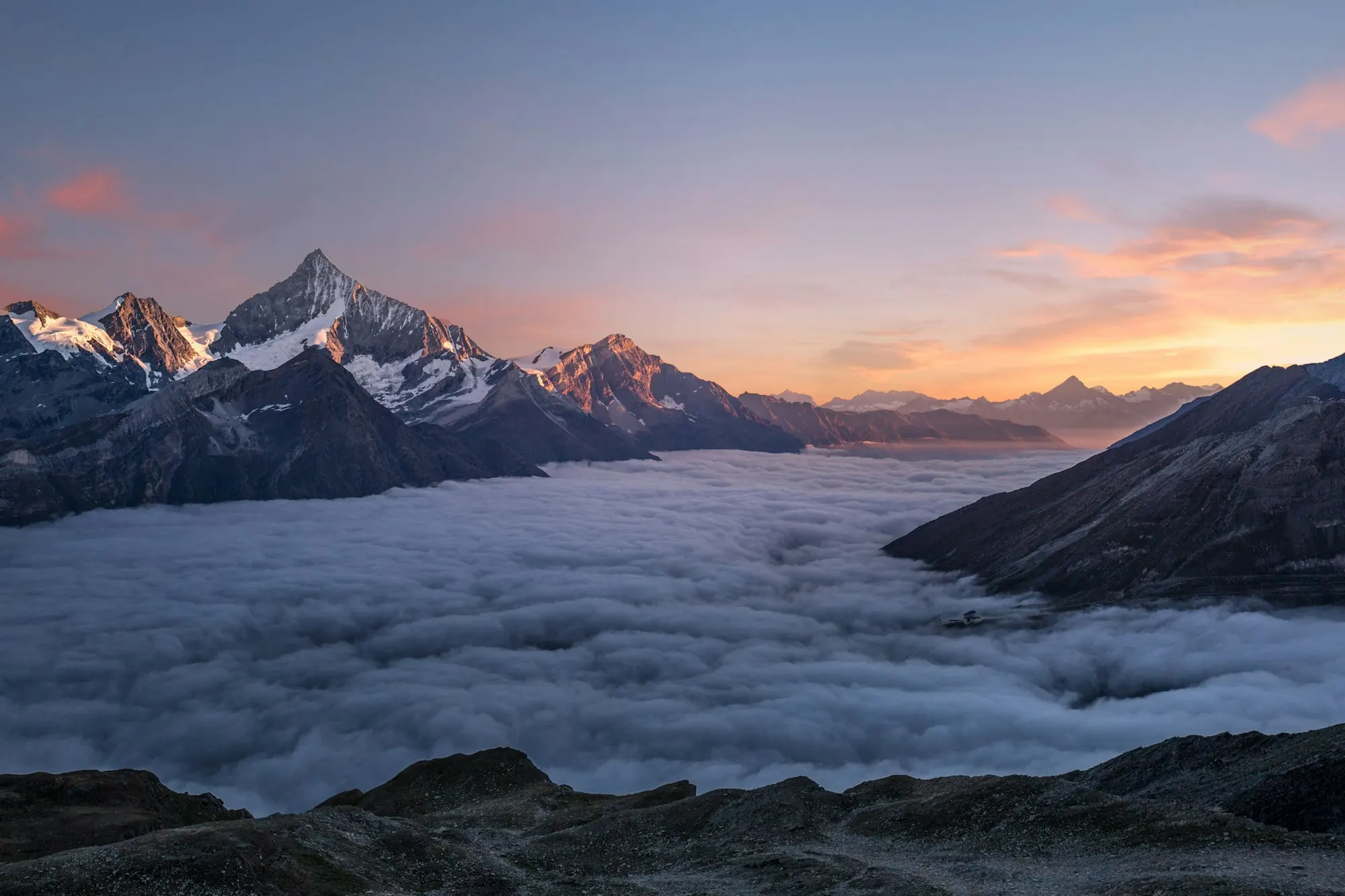
Base Camp is at 5,364m. Kala Patthar, where the photograph you have in your head is taken from, is 5,545m.
Plenty of travel policies cap trekking cover at 3,000m or 5,000m. A 5,000m ceiling leaves you uninsured for precisely the two days you came for. Check the altitude as a number, confirm helicopter evacuation is named, and aim for cover to 6,000m. "Covers trekking" on a policy summary means nothing up here. While you are at it: UV at 5,000m is roughly double sea level, so category 4 glacier glasses, not sunglasses.
What it costs
| Style | Total | What you get |
|---|---|---|
| Independent | USD 1,000-1,500 | Permits, flights, meals, your own lodge arrangements |
| Standard guided | USD 1,400-2,500 | Guide, porter, flights, permits, lodges, most meals |
| Luxury | USD 3,000-5,500+ | Premium lodges, private guide, often a helicopter out |
Most first-timers land in the standard guided band, which is the right place to be for a first trip to this altitude.
Frequently asked questions
Is August too late to book an Everest Base Camp trek for October 2026?
No. Early October departures are tight on high-camp lodges at Lobuche and Gorak Shep, so you will be taking what your agency can get rather than choosing. Late October and November still have good availability. Book within a fortnight if your dates are fixed.
Can I trek to Everest Base Camp without a guide in 2026?
It is contested. Nepal's April 2023 rule requires a licensed guide for trekkers, but the Khumbu Pasang Lhamu Rural Municipality runs its own permit regime and is widely reported not to have adopted it. Enforcement at Lukla and Monjo has been tightening either way, and a guide is worth hiring on altitude-safety and lodge-access grounds regardless of the legal answer.
Why does my Lukla flight leave from Ramechhap instead of Kathmandu?
Because it is peak season. Kathmandu's single runway is shared with international traffic and mountain flights must be completed before cloud builds around 11 AM, so the aviation authority moves Lukla departures to Manthali Airport in Ramechhap for the busy months. It costs you a 1 AM start and buys you a better chance of actually flying.
How much are Everest Base Camp permits in 2026?
Two permits: Sagarmatha National Park at NPR 3,000 and the Khumbu Pasang Lhamu Rural Municipality fee at NPR 2,000 to 3,000. Roughly USD 37 to 50 for a foreign passport, with reduced national park rates for SAARC nationals including Indian passport holders. Both are bought on arrival, not in advance.
How cold does it get at Gorak Shep in November?
Nights run between -20C and -25C, with cold snaps to -28C, and teahouse rooms are unheated. A sleeping bag rated to -20C is the floor for early November and -25C for departures after the 15th.
October or November for the best views of Everest?
November. The air is drier once the last post-monsoon moisture clears, and the definition on the peaks from Kala Patthar at sunrise is better than at any other point in the year. October is warmer and more forgiving, which is why most first-timers should still choose it.
Written and fact-checked by Tripmojo’s editorial team. Drafted with AI assistance, then reviewed by Simran Raheja before publishing.
Related articles
 Rovaniemi vs Levi: Choosing Your December 2026 Lapland Base
Comparing Rovaniemi vs Levi for a December 2026 Lapland trip? Compare costs, daylight, activities, and DIY booking secrets to choose your ideal Arctic base.
- Proof of Onward Travel: What Counts, Who Checks, and Legal Fixes
Planning a one-way flight? Here is how proof of onward travel actually works, why 24-hour rules fail at check-in, and legal ways to satisfy airlines.
 Self-Transfer Flights: How Much Layover Do You Need?
What a self transfer flight really is, how to calculate your true layover buffer, the checked-bag visa trap, and what to do when leg one runs late.
- Free Airline Stopover Programs: How to Book Hotel & City Stays
Discover how free airline stopover programs work. Learn to book free stopover hotels in Doha, Dubai, Istanbul, and Abu Dhabi with our step-by-step guide.
 ADE 2026 First-Timer's Guide - Amsterdam Dance Event, Decoded
ADE 2026 takes over Amsterdam Oct 21-25. How tickets really work, which club nights sell out first, where to stay by scene, and the free daytime program.
 Pushkar Camel Fair 2026 - Dates, Camps, and When to Go
Pushkar Camel Fair 2026 runs Nov 17-24. Why the camels leave before most tourists arrive, real tent-camp prices, a 2-3 day plan, and how to reach Pushkar.