Best Places to Visit in Ujjain: A 2026 Travel Guide
Explore the 25 best places to visit in Ujjain in 2026 — temples, ghats, ashrams and sacred sites — with timings, the best time to go and a day plan.

The Mahakaleshwar Jyotirlinga Temple, Ram Ghat's evening aarti, Kal Bhairav Temple, Sandipani Ashram, Mangalnath Temple and the Ujjain Observatory (Vedh Shala) are the standout picks, with Chintaman Ganesh Temple, Gopal Mandir and Kaliadeh Palace rounding out a fuller two-day visit to the city's temples, ghats and riverside sites.
Ujjain is one of Hinduism's seven sacred cities, strung along a bend of the Shipra river in Madhya Pradesh, and it rewards a traveller who is willing to get up before dawn. This is where the Mahakaleshwar Jyotirlinga draws pilgrims from across the country, where the Kumbh Mela's smaller cousin, Simhastha, floods the ghats with millions every twelve years, and where legend says a young Krishna studied under sage Sandipani. Working out the best places to visit in Ujjain means mixing the big, obvious temples with a handful of quieter riverside and old-city spots that most day-trippers miss entirely. Below I have grouped the city's essential sites into a walkable order, with notes on why each one matters and when to turn up. For a full day-by-day route and timings, our Ujjain destination guide covers the planning side in more depth.
If you want the darshan logistics handled - including the Bhasma Aarti booking - our Ujjain tour packages build these places into a two-day plan.
Top Temples & Places to Visit in Ujjain
Ujjain's reputation rests on three temples above all else, and if you only have a morning in the city, this is where to spend it. Each sits in the older part of town, within a short auto ride of the other two, so a single circuit covers them comfortably before the midday heat sets in.
| Temple | Best for | Ideal time |
|---|---|---|
| Mahakaleshwar | Jyotirlinga darshan | Pre-dawn |
| Kal Bhairav | Ritual offerings | Late afternoon |
| Harsiddhi | Lit pillars at dusk | Evening |
Warning: The inner sanctum queue moves slowly during festivals and on Mondays — build in extra time rather than rushing.
Mahakaleshwar Jyotirlinga Temple
This is the reason most visitors come to Ujjain at all. Mahakaleshwar is one of the twelve Jyotirlingas in India, and the shrine's south-facing orientation makes it unusual among Shiva temples. The pre-dawn Bhasma Aarti, where the lingam is anointed with sacred ash, is the ritual people travel for, and the queue for it forms well before sunrise. Expect a security check at the entrance and a fair bit of standing. Outside, the temple tank and surrounding courtyards are worth lingering in once the crowd thins. It sits centrally enough that most old-town hotels are a short walk or auto ride away.
Kal Bhairav Temple
A few minutes from Mahakaleshwar, this temple is dedicated to a fierce form of Shiva and is best known for the practice of offering liquor to the deity, which is poured directly and, according to devotees, disappears. It has a different atmosphere to the main temple — smaller, less touristy, and popular with locals rather than package groups. Go in the late afternoon when the crowd is thinner and you can actually see the ritual up close. It pairs well with a stop at Harsiddhi on the way back towards the ghats.
Harsiddhi Temple
Harsiddhi is one of the Shakti Peethas, marked by two tall, lamp-studded pillars that are lit for festivals and look striking after dark. The temple itself is compact, but the courtyard and the stepped tank beside it make it worth the short detour from Mahakaleshwar. Evenings, once the lamps are lit, are the best time to see it — the daytime version is a much plainer building. It's an easy walk from the Kal Bhairav temple, so most people cover both in the same outing.
Which Ghats Along the Shipra Are Worth Visiting?
The Shipra's ghats are where Ujjain's religious life actually happens — bathing, cremation, evening aarti, and during Simhastha, the mass gathering itself. Three stretches matter most, and each has a distinct character depending on the hour.
| Ghat | Best for | Ideal time |
|---|---|---|
| Ram Ghat | Evening aarti | Just before sunset |
| Narsingh Ghat | Quiet river life | Early morning |
| Siddhavat Ghat | Ancestor rituals | Mid-morning |
Tip: Watch the Ram Ghat aarti from the far bank rather than the main steps — the view is just as good and you avoid the crush. If you'd rather have an AI sequence all this for you, see how Tripmojo plans a walking-friendly route between the ghats and temples.
Ram Ghat
Ram Ghat is the most photographed stretch of the river and the main site for the evening aarti, when priests swing lamps in unison to drumming and the steps fill with onlookers. It is also the principal bathing ghat during Simhastha. Early morning is quiet and good for photographs of the temples reflected in still water; early evening, from roughly half an hour before sunset, is when the aarti crowd builds. It sits a short walk from the main temple cluster, so it's easy to fold into the same visit.
Narsingh Ghat
Quieter than Ram Ghat and mostly used by locals for their daily bath and laundry, Narsingh Ghat gives a more ordinary, unperformed view of river life. It's a good stop if Ram Ghat feels too crowded and you want a slower half hour by the water. Mornings are best, before the day heats up.
Siddhavat Ghat (Akshaya Vat)
Named for an ancient banyan tree believed to be indestructible, Siddhavat Ghat has a more contemplative feel than the central ghats — it's associated with ancestor rites and tends to draw families performing rituals rather than sightseers. The tree itself, wrapped in threads and cloth offerings, is the focal point. It's a little further out than Ram Ghat, best reached by auto, and works well as a quieter counterpoint earlier or later in the day.
Sandipani Ashram and Ujjain's Ancient Learning Sites
Ujjain's mythology reaches back to Krishna's own boyhood, and the site linked to his education sits on the edge of the old town, away from the main temple crowds.
Sandipani Ashram
Local tradition holds that Krishna, Balram and Sudama studied here under the sage Sandipani, and the ashram grounds include stones said to bear marks from the boys' slates being sharpened, along with a small display on the legend. It's a low-key, unhurried site compared with the main temples, and makes a good mid-morning stop when the heat has not yet built. It's a short auto ride from the old city and easy to combine with Gomti Kund, which sits right beside it.
Gomti Kund
This stepped tank sits next to Sandipani Ashram and is said to be the spot from which the ashram drew its water, with small shrines set into its walls. It's a peaceful, shaded spot to sit for ten minutes rather than a major attraction in its own right, and pairs naturally with the ashram visit. Cloudy mornings or late afternoons are pleasant here since the tank has little shade cover at midday.
Chintaman Ganesh Temple and the City's Other Ganesh Shrines
Ganesh worship runs through Ujjain almost as strongly as Shiva worship, and two temples in particular are worth the detour if you have a Ganesh temple habit.
Chintaman Ganesh Temple
Set across the river from the old town, Chintaman Ganesh is considered a self-manifested (swayambhu) shrine and is one of the city's oldest Ganesh temples, with an unusual moustached image of the deity that draws its own devotees separate from the main pilgrim circuit. It sits a little further out, across the Shipra, so it needs a dedicated auto or cab trip rather than a walk-on stop. Mornings are calmer; the temple gets busier on Wednesdays, which are traditionally associated with Ganesh worship.
Bade Ganesh Ji Ka Mandir
Right next to Mahakaleshwar's outer complex, this temple houses an oversized Ganesh idol along with images of the navagrahas painted on its ceiling, and it's worth the two minutes it takes to duck in while you're already at the main temple. Because it sits inside the same walking loop as Mahakaleshwar and Kal Bhairav, there's really no reason to skip it.
Gopal Mandir and the Old City's Markets and Gate
Ujjain's old town isn't only about temples — its central market square and one surviving city gate are worth a slow walk in their own right. Tripmojo's itinerary-building features can slot this walk in between temple visits automatically if you're mapping the day yourself.
Gopal Mandir
Built in marble in the early nineteenth century and set with silver-plated doors, Gopal Mandir sits right in the middle of the old city's main market square, which makes it an easy stop between shopping and sightseeing rather than a separate trip. The doors themselves have a layered history involving Maratha rulers and shifting hands over the centuries. Late afternoon, when the surrounding market is at its liveliest, is the best time to combine both.
Chaubis Khamba Gate
This twenty-four-pillared gateway is one of the oldest surviving structures in Ujjain and marks what was once an entrance to a larger temple complex. It's a quick stop rather than a destination, best seen on the way between Gopal Mandir and the ghats, and photographs well in the soft light of early morning or early evening.
Patni Bazaar and Freeganj
For a break from temples, Ujjain's two main market strips are worth a wander — Patni Bazaar for saris, brassware and traditional sweets, Freeganj for a more modern mix of shops and street food. Early evening is when both are busiest and most atmospheric, once the day's heat has dropped.
Mangalnath Temple and Navagraha Mandir: Why Do Astrologers Come to Ujjain?
Ujjain has long been treated as a centre for astrology and astronomy in Indian tradition, and two sites on the edge of town explain why.
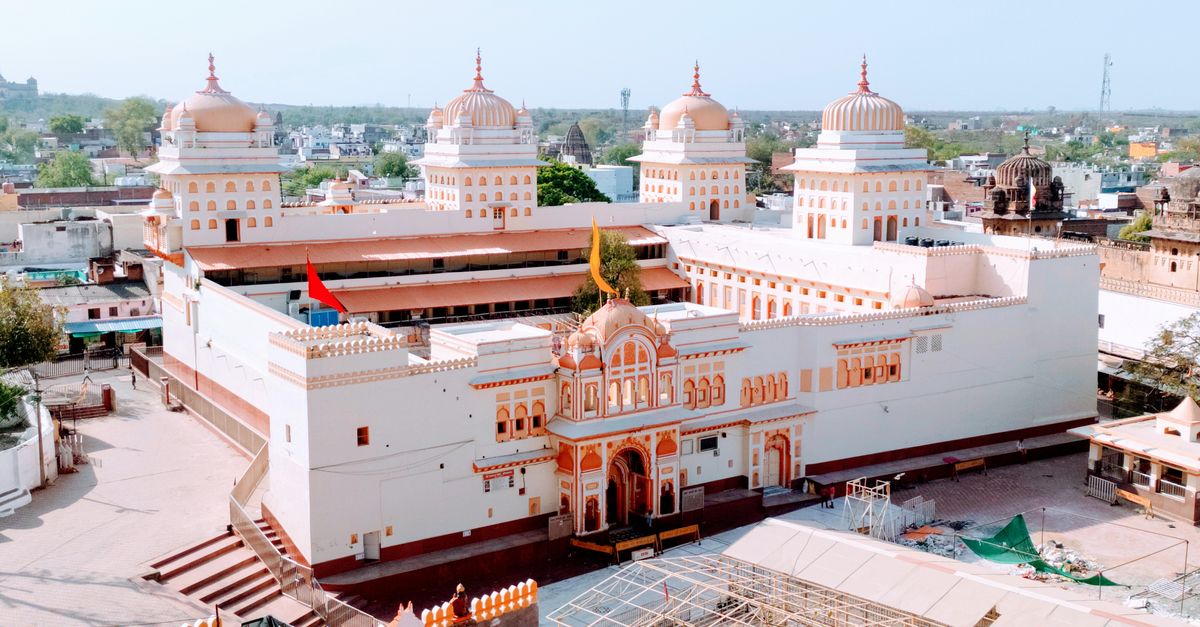
Mangalnath Temple
Ancient Indian astrological texts place Mars's birthplace at this spot on the Shipra, and the temple is still a working centre for Mars-related (Mangal Dosh) remedial rituals, drawing visitors who come specifically for these ceremonies rather than general sightseeing. Even without the astrological angle, it's a pleasant riverside temple with decent views over the water. It sits a little outside the main old-town cluster, so plan a separate auto trip, ideally in the morning when priests are conducting rituals.
Navagraha Mandir
Dedicated to the nine celestial bodies of Hindu astrology, this temple is smaller and less visited than Mangalnath but often combined with it in the same trip since both appeal to the same astrology-minded visitors. It's a quick, quiet stop, best fitted in either just before or just after Mangalnath given their proximity.
Is the Ujjain Observatory (Vedh Shala) Worth a Stop?
Ujjain has been treated as India's reference meridian for centuries — a fixed point for traditional Hindu astronomical calculations — and the Vedh Shala, built in the 1700s on the orders of Maharaja Jai Singh II, is the physical proof of that history. It's a smaller, less famous cousin of the Jantar Mantar observatories in Jaipur and Delhi, with a handful of masonry instruments used historically to track the sun, moon and stars and to fix local time. It won't take long to walk around, and there's a small planetarium attached that runs shows through the day, which is worth checking if you're interested in the science side rather than just the architecture. It sits a short distance from the main temple cluster, on the way towards Kaliadeh Palace, so it slots naturally into a half-day loop that also covers the riverside ruins. Clear mornings work best for seeing the instruments in decent light, and it's a low-crowd stop compared with the temples, so there's no real need to time it around anything specific.
Tip: Combine the Vedh Shala with Kaliadeh Palace in the same trip — they sit on the same road out of the old city.
Kaliadeh Palace and the Riverside Ruins North of the City
A few kilometres out of the old town, the Shipra runs past a cluster of ruins that make a good half-day change of pace from temple-hopping.
Kaliadeh Palace
Built on an island in the Shipra, Kaliadeh Palace was originally constructed under Sultanate-era rule and later restored by Maratha and British-era administrators, and its Persian-influenced domes and the twin water channels running beneath the building are the main draw. It has a slightly melancholic, faded-grandeur feel rather than being a polished monument, which is part of its appeal. It's a straightforward auto or cab ride from the old city, and works best in the late afternoon when the light on the river and domes is at its most flattering.
Bhartrihari Caves
Named for the poet-king Bhartrihari, who is said to have retreated here after renouncing his throne, these rock-cut caves sit near Gadkalika temple and have a quiet, overlooked quality compared with the city's bigger sites. They're worth combining with a Gadkalika visit rather than a special trip on their own, and are best seen in cooler morning hours since there's little shade around the site.
ISKCON Ujjain and the City's Museums and Gardens
Not every worthwhile stop in Ujjain is centuries old — a modern temple complex and a couple of museums round out the picture.
| Spot | Best for | Ideal time |
|---|---|---|
| ISKCON Krishna Balaram Mandir | Evening aarti | Dusk |
| Vikram Kirti Mandir Museum | Historical context | Late morning |
| Mahakal Van | A quiet break | Anytime |
ISKCON Sri Krishna Balaram Mandir
This is a modern, well-maintained temple complex run along familiar ISKCON lines, with a marble sanctum, evening aarti and a calmer, more manicured atmosphere than the older city temples. It's a good option if you want a temple visit without the crowd management of Mahakaleshwar, and the evening ceremony is the best time to go. It sits a little outside the old town, so a short cab ride is the easiest way in.
Vikram Kirti Mandir Museum
This museum and cultural centre holds a collection of archaeological finds, coins and manuscripts relating to Ujjain's long history as a seat of learning and power, and it's a useful stop if you want context for everything else you've seen. An hour or so is usually enough.
Mahakal Van
A landscaped garden developed around the Mahakaleshwar complex, largely for Simhastha crowd management, Mahakal Van gives a green, open contrast to the temple's dense inner lanes and is a pleasant spot to decompress after the main darshan.
What Else Is Worth Seeing Around Ujjain?
A handful of smaller sites round out a longer stay, worth adding once you've covered the essentials above.
Gadkalika Temple
Linked in local legend to the poet Kalidas, who is said to have composed his early verses after a vision of the goddess here, Gadkalika sits near the Bhartrihari Caves and makes an easy joint visit. It's a modest temple rather than a grand one, best visited alongside the caves in the same outing.
Durgadas Ki Chhatri
A memorial to the Rajput general Durgadas Rathore, this riverside cenotaph has a quieter, more architectural appeal than the temples nearby, with chhatri-style domes typical of Rajput memorial structures. It's worth a brief stop if you're already down at the ghats.
Bina Neev Ki Masjid
As the name suggests — 'the mosque without foundations' — this historic mosque is said to have been built without a conventional footing, and it's one of the old city's more unusual architectural footnotes. It's a quick detour rather than a planned stop, best folded into a walk through the old town.
Ujjain Zoo (Van Vihar)
If you have children in tow or just want a break from temples, Ujjain's zoo is a straightforward, low-key stop on the edge of town, best visited in the cooler morning hours.
The short version
Ujjain rewards an early start and a willingness to walk between sites rather than rush between them by car.
- Start at dawn with Mahakaleshwar Temple and the Bhasma Aarti, then loop on foot to Kal Bhairav and Harsiddhi.
- Spend an evening at Ram Ghat for the aarti, then follow the river out to Siddhavat Ghat for a quieter stop.
- Set aside a half-day for Sandipani Ashram, Gomti Kund and the Ganesh temples across the river.
- If you like ruins and astronomy, pair the Vedh Shala with Kaliadeh Palace and Bhartrihari Caves in one outing.
- For a tailored day-by-day plan built around these spots, compare options on Tripmojo's pricing page.
Frequently asked questions
How many days should I plan for visiting Ujjain?
A single busy day covers the core temples and Ram Ghat, but two full days lets you add Sandipani Ashram, the Ganesh temples, Kaliadeh Palace and the Vedh Shala without rushing. Three days suits a slower pace or a Simhastha visit.
What is the best time of year to visit Ujjain?
The cooler months from October to March are the most comfortable for walking between sites. Summer gets very hot by midday, and the monsoon brings heavy rain that can flood the lower ghats, though the city stays lush and green.
How do I get around between the temples and ghats?
Autos and cabs are the easiest way to cover the spread-out sites, since the old town's core temples are walkable but places like Kaliadeh Palace, Chintaman Ganesh and Mangalnath sit further out and need a short ride.
Is Ujjain safe for solo travellers?
Yes, Ujjain is generally a safe, temple-town atmosphere with steady foot traffic around the main sites during the day. Use normal precautions at quieter ghats after dark and keep valuables secure in crowded temple queues.
What should I wear when visiting Ujjain's temples?
Modest, covering clothing is expected at all the temples, and some inner sanctums restrict what you can carry in, including phones and bags at certain times. Comfortable footwear that's easy to remove and put back on helps, since shoes come off before most shrines.
Can I combine Ujjain with a trip to Indore or Omkareshwar?
Yes, Indore is a short drive away and often used as a base or add-on, while Omkareshwar's Jyotirlinga temple makes a natural pairing for travellers doing a wider Madhya Pradesh temple circuit.
Is photography allowed inside Mahakaleshwar temple?
Restrictions vary and are enforced fairly strictly around the inner sanctum, particularly during the Bhasma Aarti, so it's best to assume phones and cameras may need to be left outside and check on arrival rather than plan around them.
What is Simhastha and does it affect a visit?
Simhastha is Ujjain's version of the Kumbh Mela, held roughly every twelve years, and it brings enormous crowds to the ghats and temples for weeks. Outside that period the city runs at a much calmer, everyday pace.
Do I need to book anything in advance for the Bhasma Aarti?
Access arrangements change from time to time, so it's worth checking current procedures close to your visit rather than assuming walk-up access, especially if you want a good vantage point during a busy season.
Are the ghats safe to visit after dark?
Ram Ghat around aarti time is well lit and busy, which feels fine. The quieter ghats further out are better visited in daylight, since lighting and footfall drop off noticeably once the sun goes down.
Sources
- Cover photo by Pranav Rajesh on Unsplash
- Second photo by NEER BUNDELA on Pexels
Written and fact-checked by Tripmojo’s editorial team. Drafted with AI assistance, then reviewed by Simran Raheja before publishing.
More guides
- Places to Visit in Darjeeling: A Group Trip Guide
The best places to visit in Darjeeling for groups: Tiger Hill, the Toy Train, Batasia Loop, and where to base your stay for hassle-free sightseeing.
- Places to Visit in Wayanad: A Group Trip Guide
Planning a group trip? Here are the best places to visit in Wayanad, honest advice on timing, basing yourself, monsoon risks, and where crowds thin out.
- Group Trip to Europe from India: 10 Best Places to Visit
Planning a group trip to Europe from India? Discover ten unmissable places - from Paris to Prague - plus tips on timing, routes and getting around.
- Best Places to Visit in Coimbatore: A 2026 Travel Guide
Explore the 25 best places to visit in Coimbatore in 2026 — landmarks, markets, temples and nightlife — with timings, the best time to go and a day plan.
- Plan a Group Trip to Thailand: Best Places to Visit
Ready to plan a group trip to Thailand? This guide covers the best places to visit, from Bangkok's temples to Phuket's beaches and Chiang Mai's hills.
- Best Places to Visit in Hyderabad: A 2026 Travel Guide
Explore the 30 best places to visit in Hyderabad in 2026 — forts, palaces, temples and old bazaars — with timings, the best time to go and a day plan.