Europe Itinerary Template: 10 Places Worth Adding
This Europe itinerary template helps you plan a group trip to Europe, covering top cities, the Alps and islands worth adding to your route this year.

Paris, Rome, Amsterdam, Prague, Barcelona, Vienna, Budapest, the Swiss Alps around Interlaken, the Greek islands and a Nordic or Baltic city cluster cover the classic mix of culture, scenery and nightlife that most group trip destinations europe lists build around, whether you're planning a solo group trip to europe or organising a group trip around europe with friends.
Building a Europe itinerary template from scratch is the hardest part of any big trip - not because Europe is short on things to see, but because it has too many. I've put together this guide after mapping routes for friends organising everything from a two-week backpacking loop to a tightly costed group trip to Europe from India, where visa lead times and flight connections shape the whole route before a single hotel gets booked. Rather than hand you a rigid day-by-day plan, this is a rundown of the places that earn their spot on almost every route - the cities, coastlines and mountain towns worth building your own template around. If you want the full planning mechanics - budgeting, group sizes, booking order - our guide on how to plan a group trip to Europe covers that. Here, we're focused on the places themselves.
Paris: the classic opening stop for a Europe itinerary template
Paris is where most Europe itinerary templates start, and for good reason - it's the easiest first stop to reach from most long-haul routes, and it front-loads a trip with enough art, food and architecture to set the tone for everything after. The Louvre and Musée d'Orsay cover the big art names, but the real pleasure is slower: walking the Seine at dusk, getting lost in the Marais, or picking a bakery in the 6th arrondissement and just sitting with a coffee. Montmartre rewards an early climb before the crowds arrive, and the view from Sacré-Cœur is worth the walk up.
Getting here is straightforward - Paris sits on nearly every major European rail and flight network, which is exactly why it anchors so many group trip around Europe plans. Two to three days is enough to hit the highlights without rushing; mornings are quietest at the major museums, afternoons better spent wandering.
If you can't get to Europe this year, Montreal's Old Port and Quebec City's walled old town borrow a similar atmosphere - our guides to a 5-day Montreal itinerary and a 3-day Quebec City itinerary cover both in the same European style, useful if you're testing the format before committing to the real thing.
Amsterdam and Bruges: canals, bikes and an easy day trip
This trio sits close enough together to combine in under a week, ideal for the opening stretch of a longer Northern Europe route. Trains link all three in well under two hours each way, so a rental car isn't necessary here.
| Place | Best for | Ideal time |
|---|---|---|
| Amsterdam | Canals and museums | 2-3 days |
| Bruges | A quiet medieval day trip | Half to full day |
| Ghent | Skipping the crowds | Half day |
Tip: Book canal cruises or the Anne Frank House well ahead - both sell out fastest on weekend mornings.
Amsterdam
Amsterdam earns its place on almost every Northern Europe route for the canal ring alone - hire a bike, ride out past Vondelpark, and you'll cover more ground than any walking tour manages. The Anne Frank House and Rijksmuseum are the big draws, but the Jordaan district's quieter canals are where the city feels properly lived-in rather than staged for visitors. Two to three days covers the core sights without rushing. Spring and early autumn keep the canals pleasant without summer's crowds, and mornings are the calmer window at the major museums.
Bruges
An hour or so south by train, Bruges packs a similarly pretty canal network into a much smaller, quieter medieval centre. It works well as an easy day trip from Amsterdam or Brussels, or an overnight if you want mornings without the tour groups that arrive by coach around midday. The Belfry and Markt square are the obvious anchors, but the real charm is in the side streets away from both.
Ghent
A little further on than Bruges, Ghent gets a fraction of the visitors either city does, despite a comparable medieval core and a striking castle of its own. It rewards anyone willing to add an extra half-day stop, particularly if Bruges has started to feel crowded by early afternoon.
How much time should you give the Swiss Alps?
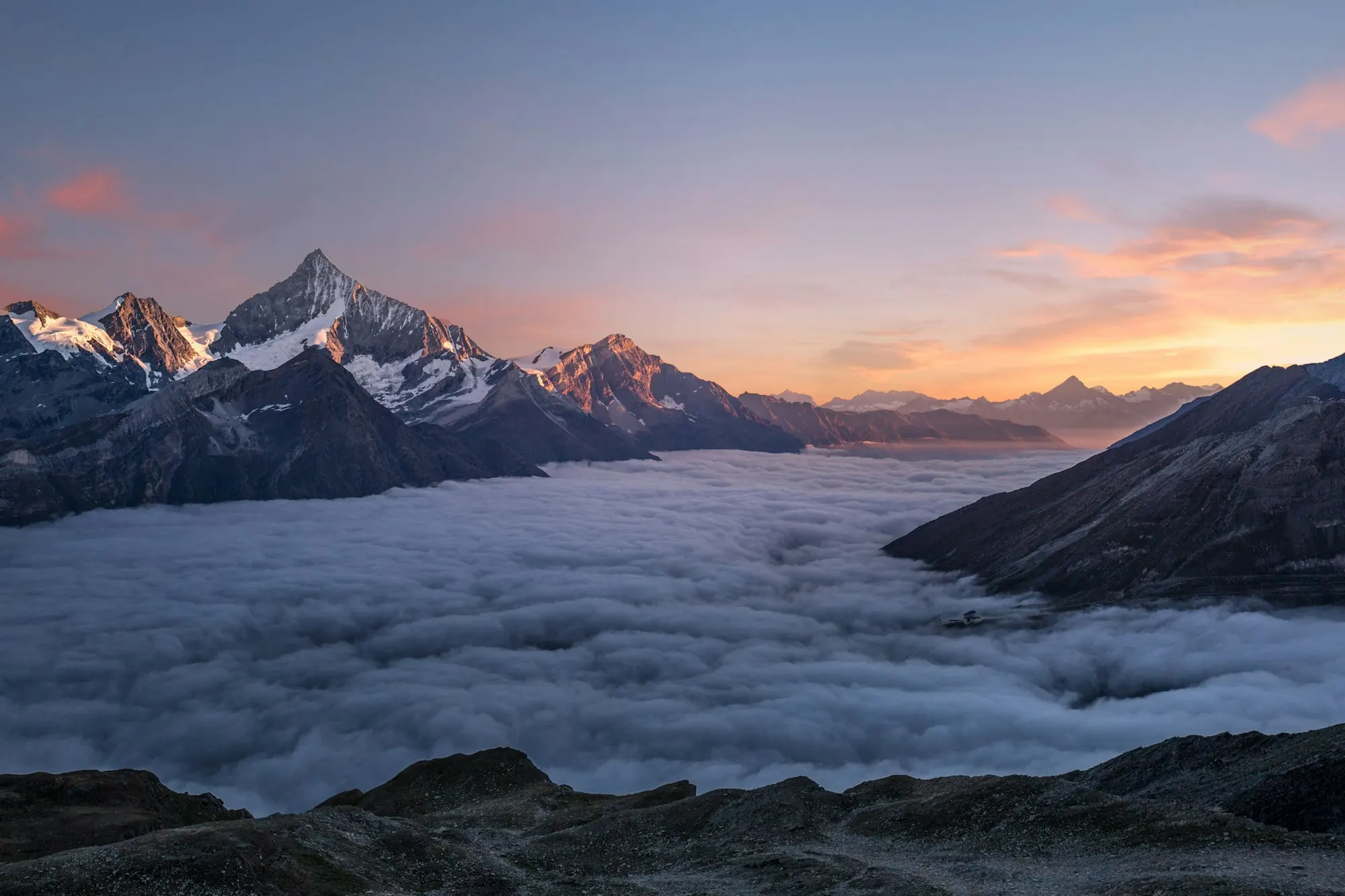
The Alps are the section of most itineraries people regret rushing. Interlaken sits between two lakes and works as the base for the Jungfrau region - take the train up towards Grindelwald and Wengen for views that don't need a strenuous hike to reach. Lucerne, an hour or so away, adds a photogenic old town and lake cruises if you want a gentler day mixed in. Zermatt, further south and car-free, sits right under the Matterhorn and suits anyone willing to add an extra travel day for the payoff.
The honest answer is three to four days minimum if you want more than a fleeting look - one day for the train journeys alone, given how much of the appeal is the scenery from the window. Trains link all three towns, so no car is needed. Clear mornings give the best mountain visibility; afternoon cloud is common in summer.
| Base | Best for | Ideal time |
|---|---|---|
| Interlaken | Jungfrau rail trips | 2 days |
| Lucerne | An easier lake town | 1 day |
| Zermatt | Matterhorn views | 1-2 days |
Warning: Mountain trains and cable cars can close at short notice in poor weather - build in a flexible day if the Alps are a priority.
Rome, Florence and the Amalfi Coast: Italy's essential trio
Italy rarely gets left off a Europe itinerary template, and this run covers its three strongest cards: ancient history, Renaissance art, and coastline. Ten days covers all three at a reasonable pace, though Rome alone could absorb a week if you let it. This trio also anchors plenty of group trip destinations europe searches turn up every summer, largely because the train network between all three is fast and easy to plan around without a rental car.
Tip: Book Colosseum and Uffizi entry ahead of time - both regularly sell out same-day slots, especially from June to August.
Rome
Rome carries the ancient-world weight - the Colosseum, the Forum, the Pantheon - and rewards early starts before the heat and the queues build through the day. Beyond the obvious sights, the Trastevere neighbourhood is worth an evening for dinner away from the tourist strip near the main ruins. Three to four days is a fair minimum; less than that and you'll spend more time queuing than looking.
Florence
A fast train north from Rome, Florence trades scale for concentration - the Uffizi, the Duomo and the Ponte Vecchio all sit within an easy walk of each other. Climb to Piazzale Michelangelo in the late afternoon for the best skyline light. Two to three days covers the centre properly, and it's an easy add-on rather than a detour given how short the train ride from Rome is.
Amalfi Coast
Reached via Naples, the Amalfi Coast is the slow-down stretch after two dense cities. Positano and Ravello give the classic views; a boat trip along the coastline itself beats the packed coastal road for both scenery and nerves. High summer brings serious heat and crowds; late spring and early autumn are kinder on both the roads and the prices. Two to three days is enough unless you want to properly do nothing for a while.
Prague and Vienna: Central Europe's fairy-tale cities
Prague's old town looks almost unreal at dusk - the castle lit up above the river, the astronomical clock crowd thinning after the tour buses leave. It's a compact, walkable city, which makes it forgiving for a first solo group trip to Europe, where solo travellers often join an organised group rather than travel entirely alone. Vienna, a few hours on by train, swaps fairy-tale for grandeur - palaces, coffee houses, and enough classical music venues to fill several evenings.
Both cities reward slower mornings - Prague's tourist crush builds through the day, so an early walk across Charles Bridge beats the midday version by a wide margin. Vienna's museums and palaces are more evenly paced throughout the day.
Two days each is a fair minimum, three if music or a day trip to somewhere like Salzburg is on the list. Spring and autumn keep both cities comfortable; Prague in particular gets uncomfortably crowded in peak summer. Direct trains connect the two in a few hours, making this one of the easier city pairings to build into a longer Central European loop without doubling back.
Budapest: thermal baths and the Danube
Budapest splits into Buda's hills and Pest's grid, joined by a run of bridges over the Danube that look their best lit up after dark. The thermal baths are the city's signature - Széchenyi's yellow courtyards are the postcard version, though quieter, less touristy baths exist if you'd rather skip the crowd. Buda Castle and the Fisherman's Bastion give the best skyline views, best caught in late afternoon as the light turns.
A river cruise after dark is worth the couple of hours it takes, and it's a good way to close out a day rather than open one. Two to three days covers the city comfortably, with an extra half day if the baths are a priority rather than an add-on.
Budapest's trains link easily to both Vienna and Prague, which is why the three so often travel together on a Central Europe route. Shoulder season - spring or early autumn - keeps the baths and the castle grounds free of the worst summer queues.
Tip: Go to the baths on a weekday morning if you want them closer to peaceful than busy.

Barcelona and the Costa Brava
Barcelona mixes Gaudí's unfinished Sagrada Família and the wandering lanes of the Gothic Quarter with a beach the city built practically overnight for the 1992 Olympics. Park Güell's terraces give one of the better free-ish city views, and the food markets - La Boqueria especially - are worth a slow browse rather than a rushed photo stop. It remains one of the most booked group trip destinations europe travellers search for every summer, largely thanks to direct flights and a nightlife scene that suits larger groups.
Beyond the city, the Costa Brava's smaller coastal towns - Cadaqués and Tossa de Mar among them - make an easy day trip or overnight if the group wants a beach day without leaving the region.
Three days covers Barcelona's core sights properly, four if a coastal day is added. Mornings are the calm window at the Sagrada Família and Park Güell before tour groups arrive; evenings belong to the beach promenade and tapas bars. Late spring through early autumn gives the best beach weather, though the city itself works year-round for the architecture and food alone.
Is Santorini worth adding to a group itinerary?
Santorini's caldera-view sunset in Oia is one of the most photographed moments in Europe, and yes, it's worth the detour if you have the extra days and budget - flights and ferries here run less frequently and cost more than mainland stops. Mykonos trades the caldera view for a livelier nightlife scene and beach clubs, which suits groups looking for a party stop rather than a quiet one. Naxos, less visited than either, offers longer beaches and a slower pace if the group wants a rest day between the busier stops.
Reaching any of the three usually means a flight or ferry from Athens, so build in a buffer day either side in case of delays - island ferries run less reliably than mainland trains. Three to four days per island is reasonable; fewer than that and you spend more time in transit than on the beach.
| Island | Best for | Ideal time |
|---|---|---|
| Santorini | Caldera views, sunsets | 3-4 days |
| Mykonos | Nightlife and beach clubs | 2-3 days |
| Naxos | A quieter pace | 2-3 days |
Late spring and early autumn avoid both peak summer prices and the harshest heat.
What's the best Nordic or Baltic add-on for a longer trip?
If the main route already covers Western and Central Europe, a Nordic or Baltic leg is the natural extension rather than a separate trip. Copenhagen's Nyhavn harbour and Tivoli Gardens make an easy, walkable couple of days; Stockholm's Gamla Stan old town does something similar with a stronger waterside setting. Tallinn's Old Town, smaller and cheaper than either, is often the surprise favourite for groups who weren't expecting much from it.
A cruise is genuinely one of the more efficient ways to string several of these together without the flight logistics of hopping between each city - our 7-day Northern Europe Baltic cruise itinerary lays out a route covering the region's main ports in a single trip, worth a look if this leg appeals.
Summer gives the longest daylight and mildest weather this far north, which matters more here than almost anywhere else on this list - winter days are genuinely short. Two to three days per city is enough for the old towns and harbours; add a sea day or two if you go by cruise rather than flying between stops.
Edinburgh and the Scottish Highlands: a different pace
Edinburgh closes out plenty of routes rather than opening them - it's a good last stop precisely because it slows things down. The Old Town's closes and the castle on its rock give the city its skyline; Arthur's Seat gives a proper hike within the city limits if legs still have it in them. The Highlands, a few hours north by car or organised tour, swap city streets for lochs, glens and single-track roads that reward slow driving rather than a rushed loop.
Edinburgh itself needs two days minimum; add a full day or two for a Highlands loop if time allows, since the driving alone eats into the day more than the distances suggest. August brings the Fringe Festival and genuinely packed accommodation, so book well ahead if that timing overlaps with your trip; June and September are calmer while still giving decent weather odds.
This is also a sensible stop to swap in a smaller group or a family mix rather than a full group tour - if you're travelling with children instead, our 10-day Thailand family itinerary shows how a slower, family-paced route is structured differently from a group-focused one.
The short version
A Europe itinerary template works best when it's built around a handful of places you actually want to slow down for, not a checklist of everything the continent offers - use this list to build your own Europe itinerary template rather than copying someone else's route exactly.
- Open with Paris, Amsterdam or Rome, whichever has the easiest flight connection for your group
- Give the Alps or a coastal stretch at least three full days rather than a rushed overnight
- Pair two Central European cities, such as Prague and Vienna or Vienna and Budapest, for an easy train link
- Extend into a Nordic or Baltic add-on only if you have time beyond the core two weeks
- Check the group trip planning guide before locking in flights or accommodation
Frequently asked questions
How many days do you need for a solid Europe itinerary template?
Two to three weeks covers five or six stops comfortably, giving two to three days per city plus travel days between them. A single week works if you stick to two or three places that are close together, like Paris and Amsterdam or Prague and Vienna.
What's the best season to travel?
Late spring (May-June) and early autumn (September) give the best mix of decent weather and manageable crowds across most of the places on this list. Peak summer is busiest and priciest, especially in Italy, Greece and Barcelona.
How do groups usually get around between cities?
Trains cover most of Western and Central Europe well and are often faster door-to-door than flying once airport transfers are factored in. Budget flights make sense for longer hops, such as into the Greek islands or up to the Nordic cities.
Is it safe to join a solo group trip to Europe?
Yes - joining an organised group is one of the more common ways solo travellers cover Europe, and cities like Prague, Budapest and Vienna are well set up for it, with plenty of hostels and tour operators geared towards solo joiners.
How far ahead should a group trip to Europe from India book flights and visas?
Start Schengen visa applications several months out where possible, since processing times and appointment slots vary by season and consulate. Book flights as early as the group's dates are confirmed, since fares for larger groups travelling together rise faster than solo bookings.
Should we use trains or budget flights between stops?
Trains are usually more reliable and less hassle for city-to-city hops under about four hours, with no airport transfer or check-in buffer needed. For longer jumps, such as mainland Europe to the Greek islands or Scandinavia, flying is usually faster overall.
How do I structure the days once I've picked places?
Block out arrival and departure days separately from full sightseeing days, and leave at least one buffer day for delays or a slower pace. Our Japan itinerary template Excel guide shows a similar day-by-day spreadsheet structure that adapts easily to a Europe route.
What's a realistic minimum for a first-timer covering multiple countries?
Ten days is workable for three cities if they're well connected, such as Prague, Vienna and Budapest. Fewer than that and you'll spend more time packing and unpacking than actually seeing anything.
Are big European cities safe for groups at night?
Generally yes in the areas covered on this list, though standard city precautions apply - watch belongings on public transport, avoid poorly lit shortcuts late at night, and agree a group meeting point before a night out.
Should we book accommodation before or after fixing the route?
Fix the rough route and number of nights per stop first, then book accommodation, since popular areas near main sights in Rome, Paris and Amsterdam fill up months ahead in peak season.
What are good group trip destinations in Europe for a first-time trip?
Paris, Amsterdam, Rome and Barcelona are the most forgiving first-timer stops thanks to good transport links, plenty of group-friendly accommodation and enough to do that nobody in the group gets bored.
Is a rental car needed for this kind of route?
Not for most of this list - trains cover the cities well. A car only becomes useful for the Scottish Highlands or for a slower, more rural loop through parts of the Alps.
Sources
- Cover photo by Hem Poudyal on Unsplash
- Second photo by Karsten Würth on Unsplash
Written and fact-checked by Tripmojo’s editorial team. Drafted with AI assistance, then reviewed by Simran Raheja before publishing.
More guides
- Group Trip to Europe from India: 10 Best Places to Visit
Planning a group trip to Europe from India? Discover ten unmissable places - from Paris to Prague - plus tips on timing, routes and getting around.
- Solo Group Trip to Europe: 10 Best Places to Visit
Planning a solo group trip to Europe? Here are the best cities, coasts and mountain towns to visit, with tips on timing and getting around safely.
- Plan a Group Trip to Thailand: Best Places to Visit
Ready to plan a group trip to Thailand? This guide covers the best places to visit, from Bangkok's temples to Phuket's beaches and Chiang Mai's hills.
- Thailand Itinerary 10 Days Family: Best Places to Visit
Our Thailand itinerary 10 days family guide covers the best places to visit, from Bangkok and Chiang Mai to Phuket, plus tips on timing and getting around.
- Best Places to Visit in Ujjain: A 2026 Travel Guide
Explore the 25 best places to visit in Ujjain in 2026 — temples, ghats, ashrams and sacred sites — with timings, the best time to go and a day plan.
- Best Places to Visit in Ooty: A 2026 Travel Guide
Explore the 25 best places to visit in Ooty in 2026 — viewpoints, waterfalls, tea gardens and lakes — with timings, the best time to go and a day plan.