Solo Group Trip to Europe: 10 Best Places to Visit
Planning a solo group trip to Europe? Here are the best cities, coasts and mountain towns to visit, with tips on timing and getting around safely.

For a solo group trip to Europe, prioritise Lisbon, Prague, Budapest, the Amalfi Coast, Interlaken, Barcelona, Amsterdam, the Greek islands, Croatia's Dalmatian coast and Vienna - each offers walkable centres, hostel-friendly social scenes, easy rail or flight connections, and enough organised activity to make solo travellers feel part of a group fast.
A solo group trip to Europe is one of those ideas that sounds like a contradiction until you actually do it - you travel with a fixed group of people you barely know, while still keeping the freedom to duck off for a solo coffee or a long walk whenever you fancy it. Europe suits this style of travel better than almost anywhere: dense old cities, short train hops between countries, and a hostel-and-tour culture built around meeting people. This guide is not a day-by-day itinerary - for that, see our guide on how to plan a group trip to Europe or planning a group trip to Europe from India. Instead, it runs through the specific places worth building a trip around, from the standard group trip destinations europe travellers keep searching for to a few quieter alternatives worth adding on.
Lisbon: the easiest first stop for a solo group trip to Europe
Lisbon works as a soft landing for any group, solo travellers included. The city is built on hills over the Tagus, which means every second street corner turns into a viewpoint, and the historic trams and funiculars do a lot of the sightseeing for you without anyone needing to plan a route. Alfama's tangle of lanes, the Belém waterfront with its monastery and tower, and the nightlife strip around Bairro Alto all sit close enough together that a group can split up for an afternoon and reconvene for dinner without logistics turning into a headache.
What to actually do: walk Alfama in the morning before the heat and crowds arrive, take Tram 28 for at least one leg rather than the full loop, and spend an evening at a fado house - one of the few Lisbon experiences that genuinely is better shared. A day trip to Sintra's palaces is worth the extra time if your group has more than three days in the city.
Fly into Lisbon direct from most European hubs, or connect via a European gateway if travelling from further afield - our guide on planning a group trip abroad covers the logistics of getting a mixed group there together. Spring and early autumn are the calmest times, avoiding the peak summer heat and the thickest crowds around the main viewpoints.
Prague: is it still worth the hype for solo travellers?
Prague earned its reputation as a backpacker essential decades ago and it has not really lost it, even if the crowds are thicker now. The old town's Gothic spires, the astronomical clock, and the castle above the river still deliver on first sight, and the beer hall culture makes it one of the simplest cities in Europe to end up sharing a table with strangers who become the rest of your evening.
Spend a morning on Charles Bridge before the tour groups arrive, walk up to Prague Castle for the view back over the red roofs, and set aside an evening for the Jewish Quarter's synagogues and old cemetery, which is quieter and more affecting than the main tourist loop. Beer hall dinners are the default group activity here and barely need planning.
Prague connects easily by train to Vienna, Budapest and Berlin, which is why it anchors so many multi-city Central European itineraries strung together over a week or two. If cost is the deciding factor for your group, our guide on planning a group trip on a budget breaks down where Central Europe still offers good value.
Tip: Book the castle and any timed museum entries for the morning slot - by early afternoon the queues stretch well past the gate.
Budapest: baths, ruin bars and a river that ties it together
Budapest is really two cities either side of the Danube - hilly Buda with the castle district, and flat, grid-planned Pest with the parliament building and most of the nightlife. The contrast is part of the appeal, and a group can cover both sides comfortably on foot and by tram over a couple of days.
The thermal baths are the one activity that suits groups better than almost anywhere else in Europe - Széchenyi's outdoor pools work for a lazy afternoon, and most groups end up going together simply because it is more fun with company. Ruin bars, converted from old buildings into layered, mismatched drinking dens, are the other Budapest speciality and tend to become the default evening plan without anyone organising it.
Walk up to Buda Castle and Fisherman's Bastion for the skyline view, particularly at dusk when the parliament building lights up across the water. A river cruise, even a short one, is worth the modest extra cost for the same view from below.
Budapest sits on the same rail corridor as Prague and Vienna, so it slots naturally into a longer Central European loop. Late spring through early autumn covers the baths season best, since outdoor pools lose their appeal once the weather turns properly cold.
Barcelona: how much time do you actually need here?
Barcelona rewards groups who split their days into a rough shape - mornings for Gaudí and the Gothic Quarter, afternoons for the beach or a museum, evenings for tapas that run long by design. The city is compact enough to walk most of it, and the metro fills the gaps, so getting a group of six or eight people from place to place rarely turns into the ordeal it can be elsewhere.
Sagrada Família is the one sight nobody skips, and it is worth seeing even from outside if your group is not fussed about queuing. The Gothic Quarter's narrow lanes, Park Güell's mosaic terraces, and a wander down Las Ramblas round out a solid two days. Barceloneta beach gives the trip a genuine holiday afternoon if the weather holds.
Three full days is the realistic minimum to see the main sights without rushing and still leave an evening free for tapas bars and late dinners, which start later here than almost anywhere else in Europe. Add a fourth day for a side trip to Montserrat if your group likes a change of scenery.
Barcelona's airport connects directly to most of Europe and to several long-haul gateway cities via one stop, making it an easy point to fly a scattered group into.
Amsterdam: canals, cycling and an easy pace for groups
Amsterdam's canal rings are compact enough that most groups end up doing everything on foot or by bike within a day or two, which keeps the logistics simple even for a larger group. The Jordaan district's quiet canals, the museum quarter around the Rijksmuseum and Van Gogh Museum, and the busier Red Light District each give a different flavour of the city without needing much planning between them.
Renting bikes as a group is the single best thing to do here - it is how locals move around and it turns sightseeing into an activity rather than a series of stops. Anne Frank House is worth building a morning around, and a canal boat ride is the easiest way to see the grand merchant houses from water level.
Amsterdam is also a practical hub - direct flights connect it to most of Europe and much of Asia, and it works well as either the start or end point of a longer trip through the Netherlands and Belgium.
Here is roughly how the first half of a Europe-wide route stacks up for a mixed group:
| Place | Best for | Ideal time |
|---|---|---|
| Lisbon | Easy first stop, walkable old town | Spring or autumn |
| Prague | Beer hall culture, castle views | Spring, early autumn |
| Budapest | Thermal baths, ruin bars | Late spring to early autumn |
| Barcelona | Tapas, beach afternoons | Late spring to early autumn |
| Amsterdam | Cycling, canals, museums | Spring to early autumn |
Coming through Amsterdam later in the trip works well since by then the group has usually settled into a rhythm and does not need much beyond a bike and a rough plan.
Interlaken and the Swiss Alps: what makes this the best base for a group trip around Europe?
Interlaken sits between two lakes in the middle of the Bernese Alps and exists almost entirely to send visitors up into the mountains around it, which makes it one of the few places in Europe built specifically for groups doing exactly what yours is doing. The town itself is small - the real reason to come is the cluster of villages and peaks within reach of it.
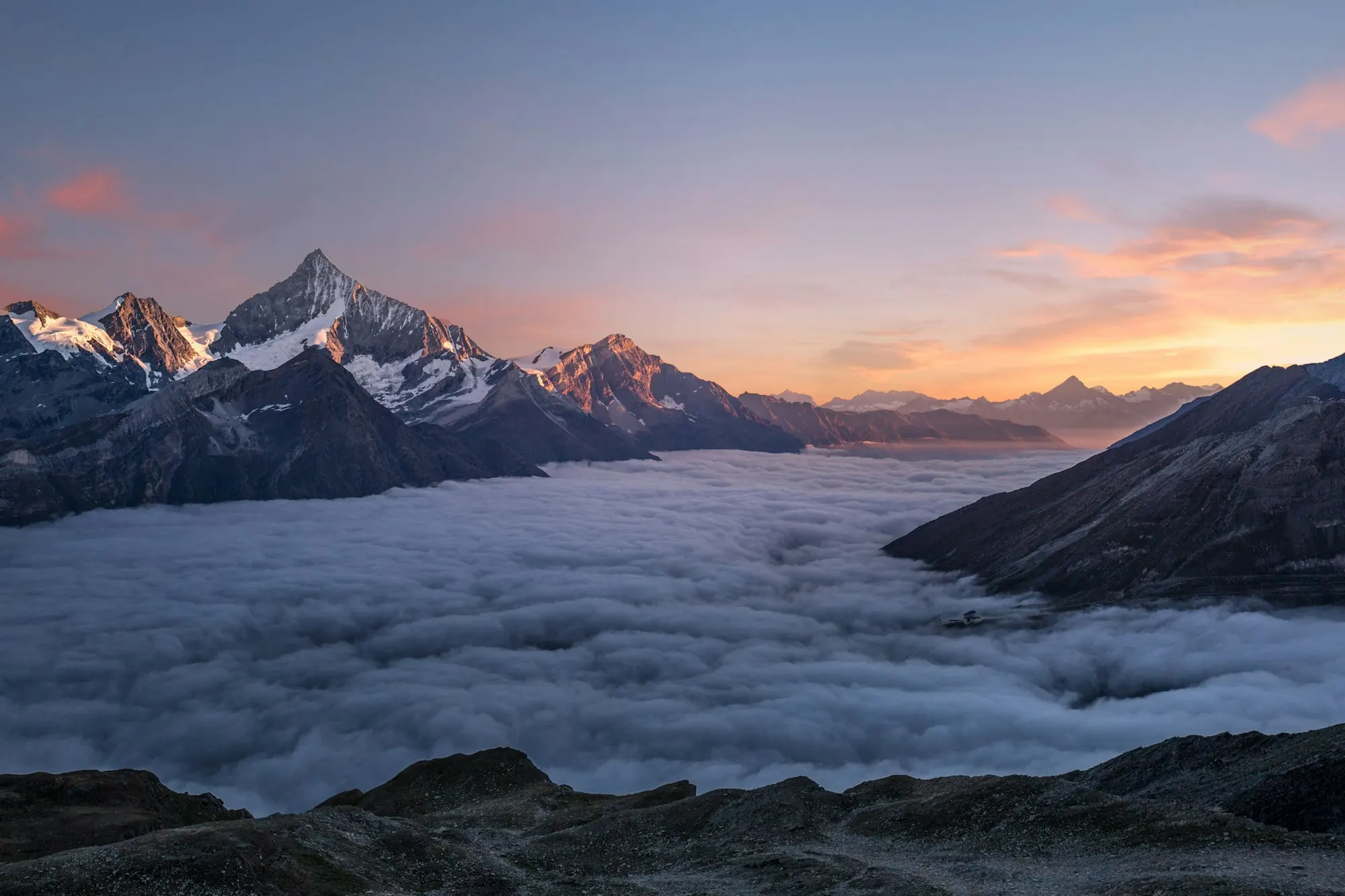
Grindelwald and Lauterbrunnen are the two most useful bases beyond Interlaken itself: Grindelwald sits under the Eiger with easy access to cable cars and hiking trails, while Lauterbrunnen's valley of waterfalls is one of the most photographed spots in Switzerland and barely needs an itinerary - you can see most of it from the valley floor.
| Base | Best for | Ideal time |
|---|---|---|
| Interlaken | Lakes, adventure sports booking | Summer |
| Grindelwald | Cable cars, Eiger views | Summer |
| Lauterbrunnen | Waterfalls, easy valley walks | Summer |
Paragliding, canyoning and via ferrata routes are all run as group bookings here, which is part of why Interlaken works so well if your crew wants at least one full adventure day. Trains from Interlaken reach most other major Swiss and neighbouring cities within a few hours, so it slots into a group trip around Europe without needing its own separate flight. Summer is by far the best season - many of the higher trails and cable cars are far less rewarding, or simply closed, once the snow properly sets in outside winter sports season.

The Amalfi Coast: Positano, Amalfi town and the drive between them
The coast road between Sorrento and Salerno is the actual attraction here as much as any single town - a narrow, cliff-hugging drive with the Tyrrhenian Sea dropping away on one side and pastel villages stacked on the other. Groups usually base themselves in one town and use ferries or the coastal bus to reach the others, which avoids anyone having to drive the road's tighter hairpin bends.
Warning: The coast road gets seriously congested in July and August - if your group is driving rather than taking the bus or ferry, build in extra time for delays, especially around midday.
Positano
Positano is the postcard version of the coast - steep stairways instead of streets, boutiques and restaurants stacked above a small beach. It gets crowded through summer, so mornings and early evenings are the calmest windows for photos and a swim. Ferries here connect easily to Capri for a day trip, which most groups add on if they have the time.
Amalfi Town and Ravello
Amalfi town itself is smaller and less photographed than Positano but has the coast's main cathedral and a proper working harbour. Ravello sits higher up with quieter gardens and some of the best panoramic views on the whole coast, and it makes a good half-day escape from the busier towns below when a group wants somewhere calmer for an afternoon. Both are easy stops on the same coastal bus or ferry route, so there is no need to hire a car just to see them.
Santorini and Mykonos: which Greek island suits a group trip?
Santorini and Mykonos are the two Greek islands most group trips gravitate toward, and they suit slightly different kinds of groups. Santorini is built around its caldera - the dramatic drop from the clifftop towns of Fira and Oia down to the sea below - and it is the better pick for a group that wants sunset views, quieter walks between whitewashed villages, and one genuinely spectacular photo stop most evenings.
Mykonos is louder and more nightlife-driven, with beach clubs that run all day into evening and an old town of narrow lanes built to get you lost on purpose. It suits a group that wants at least a couple of big nights out built into the schedule.
| Island | Best for | Ideal time |
|---|---|---|
| Santorini | Sunset views, quieter walks | Late spring, early autumn |
| Mykonos | Beach clubs, nightlife | Summer |
Both islands connect by ferry to each other and to Athens, so a group can realistically do a few days on each without much dead time in transit.
Tip: Book inter-island ferries a few days ahead in July and August - the fast boats between Santorini and Mykonos sell out on the most popular afternoon departures.
Late spring and early autumn give the best balance of good weather and thinner crowds on both islands, while high summer brings the heat, the crowds and the best nightlife all at once.
Dubrovnik and Split: the Dalmatian coast for group trips Europe travellers love
Croatia's Dalmatian coast has become one of the most popular group trips Europe travellers plan around, largely because it combines old stone cities with genuinely excellent swimming, all strung along a coastline that is easy to move down by ferry, bus or a short flight between Dubrovnik and Split. Coordinating ferry times and accommodation for a bigger group can get messy fast - our roundup of the best group trip planners covers tools built exactly for this kind of multi-stop trip.
Dubrovnik's Old Town
Dubrovnik's walled old town is the headline sight - walk the full loop of the city walls for the best overview, ideally early morning before the heat and the cruise-ship crowds arrive. The old harbour and the cable car up to Mount Srđ both add a different angle on the same view.
Split and Hvar
Split centres on the Diocletian Palace, a genuine Roman-era complex that has been lived in continuously ever since, which gives the old town a lived-in feel that is different from Dubrovnik's more preserved, tourist-facing centre. From Split, the island of Hvar is a straightforward ferry trip and gives a group at least one full beach day with a livelier evening scene than most of the mainland towns. Buses and ferries run frequently along the coast in summer, making this one of the easier stretches of Europe to move a larger group through without hiring cars. Early summer and September are calmer than the peak July-August crush, with the sea still warm enough to swim comfortably.
Vienna: a slower, grander close to a group travel Europe route
Vienna makes a good final stop on a longer trip because it slows the pace down after the more frenetic energy of cities like Prague or Budapest. Grand imperial architecture, coffee house culture, and a genuinely excellent classical music scene give a group a reason to dress up for at least one evening, whether that means a night at the opera or just a proper sit-down dinner instead of another quick bite between sights.
Schönbrunn Palace and the Hofburg cover the imperial history, the Naschmarkt is the best spot for a group lunch with plenty of variety for different tastes, and the Ringstrasse tram loop is a lazy, low-effort way to see most of the grand buildings in one sitting. An evening at a Heuriger wine tavern in the city's outer districts is a good alternative to the usual bar crawl if your group wants something calmer.
Vienna connects by fast rail to Budapest, Prague and Munich, so it works well as either the opening or closing leg of a broader group travel Europe route through Central Europe. For help thinking through the wider route and how many stops to fit in, our 12-step playbook for planning a group trip in 2026 is a useful next read. Spring and autumn suit Vienna's slower pace best, avoiding both summer crowds and the deep midwinter cold.
The short version
A solo group trip to Europe works best when you pick a handful of these places rather than trying to fit in everyone's whole wishlist, since what actually holds a good trip together is time spent together in fewer spots, not a longer list of ticked-off cities.
- Start with two or three anchor cities (Lisbon, Prague or Budapest work well) and build the rest of the route around trains or short flights between them
- Add one slower, scenic stretch - the Amalfi Coast, the Dalmatian coast or the Swiss Alps around Interlaken - to break up the city-hopping
- Block out a full adventure or beach day where the whole group does one thing together, whether that's paragliding above Interlaken or a boat day off Hvar
- Check our guide on how to plan a group trip to Europe before you lock the route, especially if the group is coming from India or juggling different budgets
- Confirm timing against each place's season - alpine trails and Greek beaches both narrow their appeal outside late spring to early autumn
Frequently asked questions
How many days do you need for a good group trip across Europe?
Ten to fourteen days lets you cover three or four of these places properly without rushing. A week is enough for two cities and a short coastal or alpine add-on, while anything under five days works best focused on just one base.
Is Europe safe for solo travellers joining a group tour?
Yes, broadly. The cities in this guide are well used to tourists and have good public transport, though normal city-travel caution applies - watch belongings on crowded trams and in busy old towns, and agree a check-in system with your group for nights out.
What's the best time of year to travel around Europe as a group?
Late spring (May-June) and early autumn (September) hit the sweet spot across most of these destinations - warm enough for beaches and hiking, thinner crowds than July and August, and cheaper accommodation than peak summer.
How do you get between countries on a multi-city itinerary?
Trains link most of the Central European and Western European cities in this guide directly and comfortably. For Greece and Croatia, budget flights or ferries usually work out faster than rail once you factor in sea crossings.
Do you need to speak the local language in each country?
No. English is widely used in hospitality and tourist areas across every place covered here, though learning a handful of basic phrases per country goes a long way and locals generally appreciate the effort.
What's a sensible group size for this kind of trip?
Six to twelve people tends to work best - big enough that solo travellers always have company, small enough that booking trains, tables and activities does not become its own project. Larger groups usually split into smaller units for day-to-day sightseeing anyway.
Is it cheaper to book as a group than travelling solo?
Often yes, particularly for accommodation, private transfers and activity bookings like paragliding or boat trips, which are usually priced per group rather than per person. Flights and trains rarely get a group discount, so book those individually and early.
How do you keep a group happy when people want different paces?
Build in unstructured time rather than a packed schedule for every day. Agree one or two must-do group activities per stop and leave the rest optional, so early risers and late sleepers, or hikers and beach lovers, can each do their own thing without anyone feeling left out.
Which of these places is easiest for a first group trip to Europe?
Lisbon, Prague and Budapest are the most forgiving starting points - compact, walkable, cheap by European standards, and full of activities that naturally bring a group together, from fado houses to thermal baths to beer halls.
Can you combine cities with a beach or island stop in one trip?
Yes, and it is one of the better ways to structure a longer Europe trip. A common pattern is two or three Central European cities followed by a coastal or island stretch such as the Amalfi Coast, the Greek islands or Croatia, giving the group a change of pace roughly midway through.
Sources
- Cover photo by Liudmila on Unsplash
- Second photo by Bjorn Snelders on Unsplash
Written and fact-checked by Tripmojo’s editorial team. Drafted with AI assistance, then reviewed by Simran Raheja before publishing.
More guides
- Europe Itinerary Template: 10 Places Worth Adding
This Europe itinerary template helps you plan a group trip to Europe, covering top cities, the Alps and islands worth adding to your route this year.
- Group Trip to Europe from India: 10 Best Places to Visit
Planning a group trip to Europe from India? Discover ten unmissable places - from Paris to Prague - plus tips on timing, routes and getting around.
- Plan a Group Trip to Thailand: Best Places to Visit
Ready to plan a group trip to Thailand? This guide covers the best places to visit, from Bangkok's temples to Phuket's beaches and Chiang Mai's hills.
- Thailand Itinerary 10 Days Family: Best Places to Visit
Our Thailand itinerary 10 days family guide covers the best places to visit, from Bangkok and Chiang Mai to Phuket, plus tips on timing and getting around.
- Best Places to Visit in Indore: A 2026 Travel Guide
Explore the 25 best places to visit in Indore in 2026 — landmarks, markets, temples and nightlife — with timings, the best time to go and a day plan.
- Best Places to Visit in Lonavala: A 2026 Travel Guide
Explore the 30 best places to visit in Lonavala in 2026 — viewpoints, waterfalls, tea gardens and lakes — with timings, the best time to go and a day plan.