Best Places to Visit in Ahmedabad: A 2026 Travel Guide
Explore the 25 best places to visit in Ahmedabad in 2026 — landmarks, markets, temples and nightlife — with timings, the best time to go and a day plan.

For a first visit, prioritise Sabarmati Ashram, the old city around Jama Masjid and Bhadra Fort, Adalaj Stepwell, and an evening at Kankaria Lake or the Sabarmati Riverfront. Add Sidi Saiyyed Mosque's carved jaali screens, Calico Museum for textiles, and Nal Sarovar in winter if birdwatching interests you.
Ahmedabad rewards travellers who slow down. Gujarat's largest city mixes a UNESCO-listed old quarter, Gandhi's ashram on the Sabarmati, stepwells cut deep into red sandstone, and a food scene that runs from dawn thepla stalls to midnight kulfi carts. This guide to the best places to visit in Ahmedabad covers the sites locals actually recommend to visiting friends and family, not just the postcard shots. I've grouped nearby spots together so you can walk one pocket of the city in a single outing rather than crisscrossing it. For a fuller day-by-day plan, dates and how long to allocate, our Ahmedabad travel guide covers the logistics; here I'm focused purely on what to see, why it matters, and when to turn up. Expect stepwells, mosques, a riverfront promenade, a lake, and one very good bird sanctuary.
Extending beyond the city? Our Gujarat tour packages link Ahmedabad with the Rann, Gir and the temple coast as one planned circuit.
Top Places to Visit in Ahmedabad (with Timings & Entry Fees)
Ahmedabad's sights cluster into a few walkable pockets: the old walled city around Bhadra Fort, the Sabarmati riverfront, the stepwells north toward Gandhinagar, and the lakes and gardens on the eastern side. Most major sites keep sensible visiting windows - mornings and early evenings are cooler and less crowded than midday, and some museums close on a specific weekday, so it's worth checking ahead rather than turning up unannounced. Entry is generally low-cost or free at the outdoor stepwells and mosques, with a modest ticket at museums and Science City. None of that is a substitute for checking current details before you travel; treat what follows as a starting point, and use a tool like Tripmojo's trip-planning features if you want the specifics slotted into an actual day-by-day itinerary.
The table below is a quick scan of what's ahead - read on for the full picture on each place, including how to reach it and the best time of day to go.
| Place | Best for | Ideal time |
|---|---|---|
| Sabarmati Ashram | History and quiet reflection | Early morning |
| Adalaj Stepwell | Architecture and photography | Mid-morning |
| Kankaria Lake | Families and evening walks | Sunset |
| Old City (Jama Masjid, Bhadra Fort) | Heritage walking | Early morning |
| Sidi Bashir Mosque | Unusual architecture | Late morning |
| Science City | Kids and a half-day out | Afternoon |
| Nal Sarovar | Birdwatching | Winter mornings |
Sabarmati Ashram and the Riverfront: Where Gandhi's Story Began
This stretch of the Sabarmati river holds two of the calmest spots in the city, one historic and one modern, close enough together to cover in a single outing.
Sabarmati Ashram
This was Gandhi's base for over a decade, and the ashram still has the low, whitewashed simplicity of the period - his living quarters, a small museum of photographs and letters, and shaded courtyards where you can just sit. It's not a flashy attraction, and that's rather the point; people come for the atmosphere as much as the exhibits. Go early, before the day heats up and before school groups arrive, and give yourself at least an hour to actually read the captions rather than just walk through. Autos and cabs reach the gate easily from anywhere in the city, and it's an easy pairing with a riverfront walk since the two sit only a short drive apart.
Sabarmati Riverfront
The riverfront promenade runs along both banks of the Sabarmati and is where Ahmedabad goes to walk, cycle, and eat street food once the sun drops. Ellis Bridge, one of the city's oldest river crossings, gives a good vantage point over the water and the gardens below. Evenings are best - the light softens, food carts set up, and the paved paths fill with joggers and families rather than traffic. There are boat rides on stretches of the river too, if you want a slower look at the skyline. It's walkable from the old city, so many visitors pair a sunset here with dinner nearby.
What Makes Adalaj Stepwell, Dada Hari Vav and Sarkhej Roza Worth the Detour?
Gujarat's stepwells are one of the region's most distinctive building types - deep, stacked stone structures built to keep a water source cool and accessible through the dry months. Ahmedabad and its edges have several worth seeking out, plus a Sufi complex nearby that uses the same restrained sandstone style.
Tip: Adalaj gets coach parties by late morning; arrive early or in the last couple of hours before closing for a quieter visit.
Adalaj Stepwell
Adalaj sits a short drive north of the city and is the one everyone photographs, for good reason - five storeys of carved stone descend below ground level, cool even in the hottest months, with intricate pillars and niches at every landing. It was built as a public water source and rest stop, and the carving on the walls (lotus motifs, mythical creatures, geometric bands) rewards a slow look rather than a quick lap. It pairs naturally with Dada Hari Vav, since both lie on the same side of town and can be visited back to back.
Dada Hari Vav
Smaller and quieter than Adalaj, this stepwell inside the city is easy to miss, which is exactly why it's worth the stop. The proportions are tighter, the crowds thinner, and the carving just as fine. It sits close to a matching mosque and tomb, so you get a small cluster of Islamic-era architecture in one spot. Visit any time outside the midday glare; there's rarely much of a queue here.
Sarkhej Roza
A short way southwest of the city, Sarkhej Roza is a walled mausoleum and mosque complex built around a large stepped tank, sometimes described as Gujarat's answer to a miniature Fatehpur Sikri. It's a good half-hour of unhurried wandering - pavilions, a palace platform, and water on most sides. Late afternoon light on the tank is the best reason to time a visit for early evening rather than noon.
Kankaria Lake: Where Should Families Spend an Evening?
Kankaria is a large, roughly circular lake ringed by a promenade, gardens, a zoo, and a scatter of small paid attractions like a toy train and boat rides - it's the closest thing Ahmedabad has to a proper city fairground, and it's built for an evening rather than a quick stop. Families dominate after school hours and at weekends, when the walking path fills and food stalls along the edge do brisk business. The zoo on one side is worth an hour if you have kids in tow, though it's a fairly standard municipal zoo rather than a wildlife highlight.
What makes Kankaria worth the trip is the atmosphere at dusk - lights come on around the lake, the water turns the colour of the sky, and the whole loop turns into a slow-moving procession of walkers, cyclists and ice-cream sellers. It's a short cab ride from the old city, so it slots in naturally after an afternoon at Jama Masjid or Bhadra Fort. Go on a clear evening rather than during the day, when the heat and lack of shade make the walk less pleasant.
The Old City Walk: Jama Masjid, Bhadra Fort and Manek Chowk
The walled old city is Ahmedabad's UNESCO-listed heart, a dense grid of mosques, gates and markets built mostly under the sultanate. It's best covered on foot, in the cooler part of the day, with a local guide if you want the history explained rather than guessed at.
| Old city stop | Best for | Ideal time |
|---|---|---|
| Jama Masjid | Architecture and quiet | Early morning |
| Bhadra Fort & Teen Darwaza | Street life and photos | Late afternoon |
| Manek Chowk | Street food | After dark |
Warning: Manek Chowk's night market gets extremely crowded on weekend evenings; keep valuables secure and expect slow going on foot.
Jama Masjid
This is one of the finest mosques of its period in Gujarat, built from yellow sandstone with a forest of carved pillars inside - some say borrowed in style from earlier Hindu and Jain temple workshops in the region. The courtyard is vast and calm even when the surrounding streets are anything but. Remove shoes before entering, dress modestly, and try to time your visit outside prayer times so you're not underfoot. Morning light through the pillared halls is the best reason to come early rather than mid-afternoon.
Bhadra Fort and Teen Darwaza
Bhadra Fort anchors the old city and gives its name to the surrounding square, still busy with shops and traffic exactly as it would have been centuries ago. Teen Darwaza, the triple-arched gateway just outside, was built as a ceremonial entrance and is one of the most photographed structures in the old town, especially with market stalls set up beneath its arches. Walk through rather than around it - the arches frame the street life on both sides rather better than any photo taken from a distance.
Manek Chowk Night Market
By day this is a fairly ordinary market square; after dark it turns into one of Ahmedabad's best-known food streets, with stalls doing everything from spiced sandwiches to elaborate sweet concoctions piled with dry fruit. It's loud, crowded and exactly what you want after a day of temple-hopping. Go hungry, go with cash, and go after sunset when the stalls are properly fired up - arriving too early means half the vendors haven't set up yet. It sits right at the edge of the Bhadra Fort area, so it's a natural end point to an old city walk.
Why Are the Sidi Saiyyed Mosque and Shaking Minarets Famous?
Sidi Saiyyed Mosque is tiny compared with Jama Masjid, and almost entirely known for one feature: a set of stone-carved window screens (jaalis), the most famous of which depicts a tree of life so fine it looks like lacework rather than solid sandstone. It's a five-minute stop rather than a destination in itself, but it sits between the old city and the riverfront, so there's little reason to skip it. Photograph the jaali screens with the light behind them in the late afternoon for the best effect.
A little further out, Sidi Bashir Mosque is known for its so-called shaking minarets - twin towers built so that, according to long-standing local claim, vibrating one causes the other to sway in sympathy through a shared flexible base, a piece of structural cleverness meant to survive tremors. Structural work over the years means the towers are usually viewed rather than climbed or tested, but the story and the architecture are worth the detour on their own. Combine it with a wider old-city itinerary rather than making a special trip just for this.
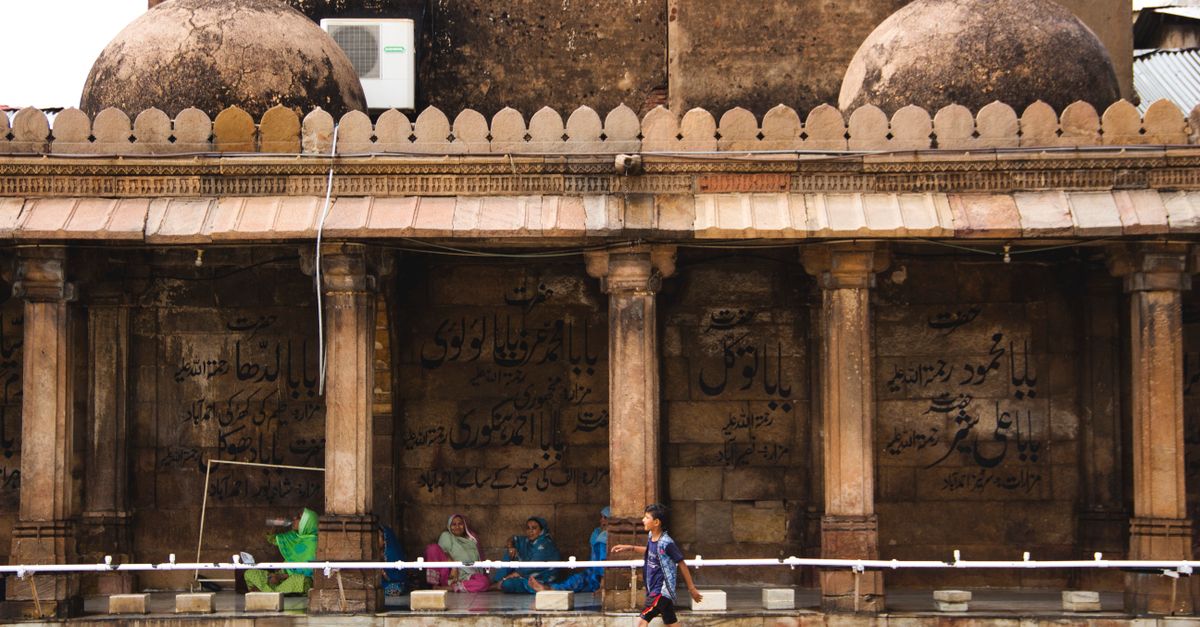
Museums Worth Your Time: Calico, Auto World and the Utensils Museum
Ahmedabad's museums are unusually specific - textiles, vintage cars, cooking vessels, even kites - and that specificity is exactly why they're worth an afternoon. None of them are large, so you can reasonably fit two into a single day.
| Museum | Best for | Ideal time |
|---|---|---|
| Calico Museum | Textile history | Morning tour slot |
| Auto World | Vintage cars | Weekday late morning |
| Utensils Museum | Quick add-on with dinner | Early evening |
Calico Museum of Textiles
This is widely regarded as one of the finest textile museums anywhere, with an extraordinary collection of historic Indian fabrics, tapestries and royal tents housed inside a set of traditional wooden havelis. Visits typically run as guided tours in fixed groups rather than free wandering, so it pays to plan ahead and arrive on time rather than expecting to walk straight in. The setting - old carved wood, quiet gardens - is as memorable as the textiles themselves. It sits on the northern edge of the city, so build in transit time, and treat it as a half-day commitment rather than a quick stop.
Auto World Vintage Car Museum
A private collection of vintage and classic cars housed on the city's outskirts, ranging from stately old sedans to the sort of coach-built curiosities you don't see outside specialist shows. It's a niche stop, but a genuinely good one if you have any interest in motoring history, and it rarely gets crowded. Late morning on a weekday is about as quiet as it gets. Combine it with Science City if you're heading that side of town, since both sit in the same general direction.
Vishala Utensils Museum
Attached to the Vishala village-style restaurant complex, this small museum holds a genuinely surprising collection of traditional Indian cooking and household vessels, some centuries old. It's an easy, quick add-on if you're already eating at Vishala for the rural-themed thali experience and folk performances in the evening - the two together make for a fuller outing than either alone. Go in the early evening so the museum visit rolls straight into dinner.
Science City and Akshardham: A Family Day Near Gandhinagar
Both of these sit toward Gandhinagar, on the northern edge of the wider Ahmedabad area, and work well paired into a single day if you have transport sorted.
Science City
This is Ahmedabad's big family-oriented science park - hands-on exhibits, an aquarium, an IMAX-style theatre, robotics and space sections, and enough outdoor space that kids can burn off energy between halls. It's genuinely aimed at a broad age range rather than being purely for young children, and a full visit comfortably fills an afternoon. Come after the mid-morning rush of school trips has thinned out, and expect to walk a fair distance between sections, so wear comfortable shoes. It's some way out from the old city, so factor in a proper taxi or auto ride rather than trying to walk any part of it.
Akshardham, Gandhinagar
Just across the city boundary in Gandhinagar, this is a large, elaborately carved temple complex dedicated to Swaminarayan, built in pink sandstone with the kind of detailed stonework that takes a genuine effort of scale to appreciate in person. Evenings sometimes bring a sound and light show over the water features, worth timing your visit around if you can. It's a longer trip out from central Ahmedabad, so most visitors combine it with Science City or treat it as a dedicated half-day rather than squeezing it into a packed itinerary.
When Is the Best Time to Visit Nal Sarovar Bird Sanctuary?
Nal Sarovar is a large shallow lake southwest of the city that turns into one of Gujarat's best birdwatching spots once the winter migratory season sets in, drawing flamingos, pelicans, cranes and a long list of waterfowl that most visitors won't have seen up close before. Boats - usually simple rowed or small motorised craft - take you out onto the water for a closer look, and dawn is unambiguously the best time to go, since birds are most active early, the light is softer, and the heat hasn't built up yet.
Outside the winter migratory window the sanctuary is far quieter and the bird count drops considerably, so if birdwatching is the main draw, plan the trip around the season rather than fitting it around everything else. It's a longer drive from central Ahmedabad than most other entries on this list, closer to an hour each way, so this is really a half-day or full-morning excursion rather than a quick add-on. Bring your own binoculars if you have them, as rentals are not always reliably available, and dress for a wetland - open ground, some mud, and no real shade.
Tip: Winter mornings give by far the best birdwatching; visiting in the monsoon or peak summer mostly means an empty lake.
Law Garden, Hutheesing Jain Temple and ISKCON: An Evening of Shopping and Temples
This trio sits on the eastern side of the city and makes a natural evening loop - shopping, a Jain temple famed for its carving, and a large Krishna temple with a livelier, more devotional evening atmosphere.
Law Garden Night Market
By day this is a public garden; by evening the pavements around it fill with stalls selling embroidered Gujarati garments, mirror-work bags and street snacks, and it's one of the better spots in the city for that kind of browsing and haggling. Prices are negotiable almost everywhere, so treat the first quote as a starting point rather than a fixed number. Evenings, particularly after the day's heat has broken, are when the stalls are fullest and the atmosphere liveliest; turning up at midday will mostly get you an empty garden.
Hutheesing Jain Temple
A 19th-century Jain temple built almost entirely from white marble, with the kind of dense, symmetrical carving that Jain temple architecture is known for across Gujarat and Rajasthan. It's calmer than the old city mosques, and the marble courtyards make for a peaceful stop mid-morning before the day gets busy elsewhere. Modest dress and quiet is expected, as it remains an active place of worship rather than purely a monument.
ISKCON Temple Ahmedabad
A large Krishna temple with a more overtly devotional, communal atmosphere than the older heritage sites - expect chanting, evening aarti, and a genuinely warm welcome to visitors regardless of background. Evening is the better time to catch the temple at its most active, particularly around the main evening prayer. It's a good contrast to spend after a day of older stone monuments, and there's usually a canteen attached if you want a simple vegetarian meal to finish the evening.
The short version
Ahmedabad rewards a loose plan more than a rigid one - treat this list of places to visit in Ahmedabad as a menu rather than a checklist, and see how Tripmojo's trip planner works if you want help turning it into an actual day-by-day route.
- Prioritise Sabarmati Ashram and the Old City walk on day one - they're close together and cover the historic core.
- Save Adalaj Stepwell, Dada Hari Vav and Sarkhej Roza for a half-day loop north of the city.
- Time Nal Sarovar around the winter migratory season if birdwatching matters to you.
- End each evening at Kankaria Lake, the riverfront, or Manek Chowk's night market depending on your mood.
- Compare Tripmojo's plans and pricing if you'd rather have the whole trip mapped out for you.
Frequently asked questions
How many days do you need to see the best of Ahmedabad?
Two full days covers the core - one for the old city, ashram and riverfront, one for the stepwells, museums and Kankaria Lake. Add a third day if you want to reach Nal Sarovar or Science City and Akshardham without rushing.
What is the best time of year to visit Ahmedabad?
Winter, roughly November to February, is by far the most comfortable season, with cool mornings and evenings and clear skies. Summer gets extremely hot, and the monsoon brings heavy, unpredictable rain, so both are best avoided if you have a choice.
Is Ahmedabad safe for solo travellers?
Ahmedabad is generally considered a safe, easygoing city for solo travel, including for women, though the usual common sense applies - stick to well-lit, busy areas after dark and keep an eye on belongings in crowded markets like Manek Chowk.
How do you get around the city - auto, cab, or on foot?
Autos and app-based cabs cover the city well and are the easiest way to move between sites that aren't within walking distance. The old city and the riverfront are best explored on foot once you're there, since traffic and one-way streets make driving through them impractical.
Do I need a guide for the old city?
You don't strictly need one, but a local guide adds a lot of context to Jama Masjid, Bhadra Fort and the surrounding lanes that you'd otherwise miss. If you'd rather go independently, a basic map of the pols (old residential quarters) helps you avoid backtracking.
What should I wear when visiting mosques and temples?
Modest, covered clothing works everywhere - shoulders and knees covered is a safe default. You'll need to remove your shoes before entering most mosques and temples, so slip-on footwear makes the day considerably easier.
Can I visit Adalaj Stepwell and Sabarmati Ashram in the same day?
Yes, though they're on opposite sides of the city, so it works best as a morning-and-afternoon split rather than trying to squeeze both in before lunch. Many visitors do Adalaj first, since it's further out, then head back toward the ashram and riverfront.
Is Ahmedabad walkable?
Individual pockets - the old city, the riverfront, Law Garden - are very walkable once you're there, but the city as a whole is too spread out to cover on foot alone. Plan on autos or cabs to link the different areas together.
What's the best way to see Nal Sarovar's birds?
Go at dawn during the winter migratory season and take one of the small boats out onto the water rather than staying at the shoreline. Bring your own binoculars and expect a longer drive than most other sights on this list.
Is Ahmedabad vegetarian-friendly?
Very much so - it's one of India's most reliably vegetarian cities, with thali restaurants, street snacks and sweet shops built almost entirely around vegetarian and often Jain-friendly menus, including around Manek Chowk and Law Garden.
Sources
- Cover photo by Karan Suthar on Unsplash
- Second photo by Setu Chhaya on Pexels
Written and fact-checked by Tripmojo’s editorial team. Drafted with AI assistance, then reviewed by Simran Raheja before publishing.
More guides
- Places to Visit in Darjeeling: A Group Trip Guide
The best places to visit in Darjeeling for groups: Tiger Hill, the Toy Train, Batasia Loop, and where to base your stay for hassle-free sightseeing.
- Places to Visit in Wayanad: A Group Trip Guide
Planning a group trip? Here are the best places to visit in Wayanad, honest advice on timing, basing yourself, monsoon risks, and where crowds thin out.
- How to Plan a Group Trip to Europe: Best Places to Visit
Planning where to take a big group in Europe? Here's how to plan a group trip to Europe, plus the cities, islands and mountain towns that work best for groups.
- Best Places to Visit in Coimbatore: A 2026 Travel Guide
Explore the 25 best places to visit in Coimbatore in 2026 — landmarks, markets, temples and nightlife — with timings, the best time to go and a day plan.
- Solo Group Trip to Europe: 10 Best Places to Visit
Planning a solo group trip to Europe? Here are the best cities, coasts and mountain towns to visit, with tips on timing and getting around safely.
- Best Places to Visit in Mumbai: A 2026 Travel Guide
Explore the 25 best places to visit in Mumbai in 2026 — landmarks, markets, temples and nightlife — with timings, the best time to go and a day plan.